Bird, bug, butterfly and a wild variety of photos from Belarus, Cyprus, Finland, Greece, Ireland, Norway, Poland, Portugal, Scotland and Spain by Irish wildlife photographer Patrick J. O'Keeffe and invited guests

Friday, 17 June 2022

KEELED SKIMMER DRAGONFLY (Orthetrum coerulescens) or HEATLAND SKIMMER DRAGONFLY male and a LARGE RED DAMSELFLY or SPRING RED EYE DAMSELFLY (Pyrrhosoma nymphula) male in the foreground at Lullymore West Bog, Lullymore, Co. Kildare, Ireland


CLICK ON PHOTO TO SEE HIGHER QUALITY IMAGE   
Click external link here for detailed Keeled Skimmer Dragonfly information
Click external link here for detailed Large Red Damselfly information

 The Keeled Skimmer Dragonfly (Orthetrum coerulescens) or Heathland Skimmer Dragonfly is of the family Libellulidae which is in the genus Orthetrum. This small to medium sized dragonfly commonly occurs in Europe, Western Asia as well as parts of North Africa. 
In Ireland it has a more patchy distribution and is uncommon. Although in western regions it is more abundant, as is the case in Britain. The main flight season is from June to August.
The Large Red Damselfly (Pyrrhosoma nymphula) or Spring Red Eye Damselfly is of the family Coenagrionidae which is in the genus Pyrrhosoma. It is a common and widespread species in Europe as well as parts of Western Asia and North Africa. In Ireland, the flight season can extends from mid April into October.
 In recent times, the english names for most European species of damselflies and dragonflies have been changed. Here the older name is used first, to reflect common useage, follow by the new name.
 
Patrick J. O'Keeffe / Rawbirds 

Monday, 30 May 2022

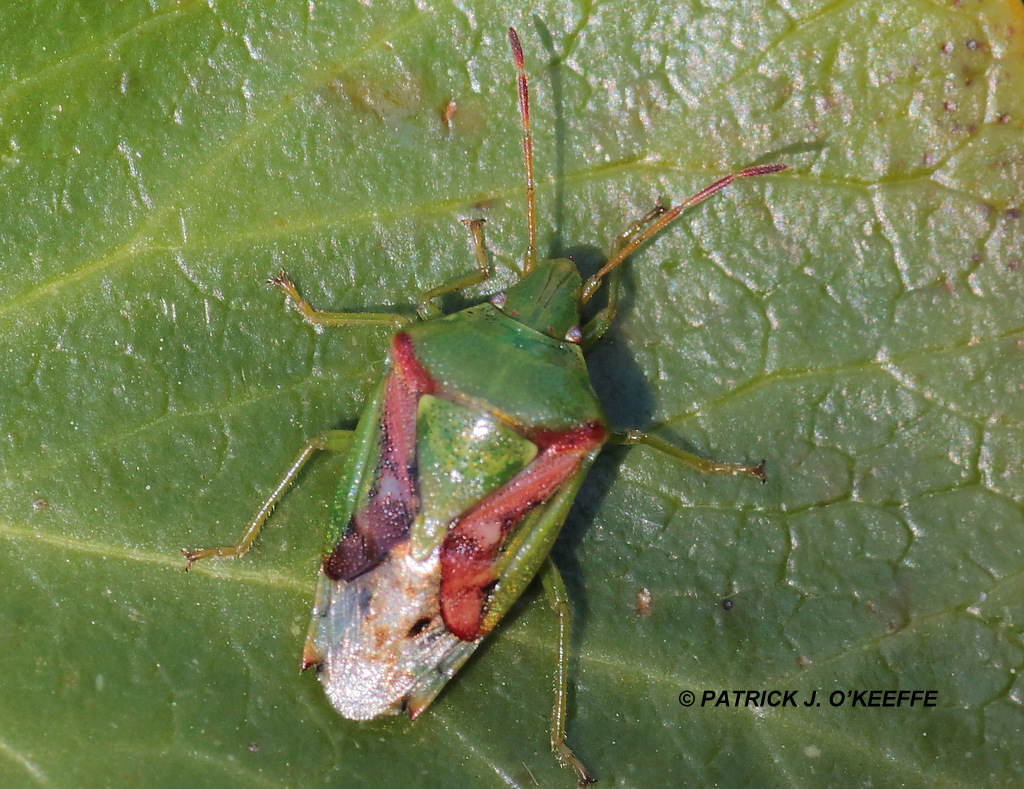
JUNIPER SHIELDBUG (Cyphostethus tristriatus) adult on 04-05-2022 at Broadmeadow Estuary, Swords, Fingal, Co. Dublin, Ireland


CLICK ON PHOTO TO SEE HIGHER QUALITY IMAGE
Click external link here for detailed species information
Click external link here to see identification guide to British and Irish Shieldbugs 
                     
The Juniper Shieldbug (Cyphostethus tristriatus) is of the family Acanthosomatidae which is in the genus Cyphostethus . It has two very distinctive purple red boomerang shaped markings on the upperparts as well as rounded "shoulders" which helps to identify from the similar Birch Shieldbug (Elasmostethus interstinctus) which has squarish "shoulders".  
It occurs in the temperate regions of Europe. In Britain, it has recently expanded its range northward and has become more common. In Ireland, this appears to be a rare species with has been reported from less than 25 locations. Although this represents the first record for Fingal, in all probably it is under recorded.
 
Patrick J. O'Keeffe / Raw Birds

Sunday, 29 May 2022

EURASIAN SKYLARK (Alauda arvensis) at Annagh Marsh, Mullet Peninsula, Co. Mayo, Ireland


CLICK ON PHOTO TO SEE HIGHER QUALITY IMAGE
Click external link here for detailed species information
Click external link here to see distribution map and to hear calls

The Eurasian Skylark (Alauda arvensis) or commonly referred to as a Skylark is a member of the lark family Alaudidae which is in the genus Alauda.
 
EURASIAN SKYLARK (Alauda Arvensis) distribution map
 
Resident breeding    Summer breeding resident    Passage migrant    Winter non breeding    Introduced resident breeding
 
SanoAK: Alexander Kürthy, CC BY-SA 4.0 <https://creativecommons.org/licenses/by-sa/4.0>, via Wikimedia Commons

Saturday, 28 May 2022

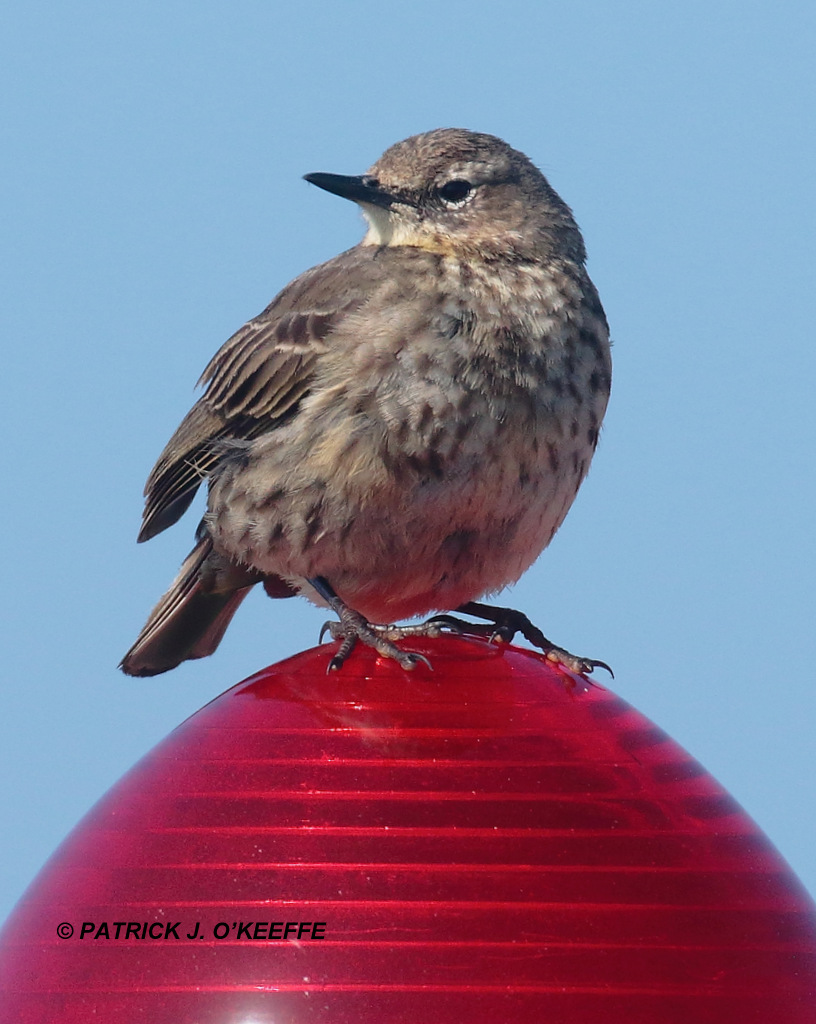
ROCK PIPIT (Anthus petrosus) on a landing beacon at Blacksod Lighthouse Helipad, Blacksod, Mullet Peninsula, Co. Mayo, Ireland


 CLICK ON PHOTO TO SEE HIGHER QUALITY IMAGE
Click external link here for detailed species information
Click external link here to see distribution map and to hear calls

The Rock Pipit (Anthus petrosus) or European Rock Pipit is of the family Motacillidae which is in the genus Anthus.

ROCK PIPIT (Anthus_petrosus) distribution map

Green
year round resident  Yellow summer resident  Blue winter resident
 
Jimfbleak, CC BY-SA 3.0 <https://creativecommons.org/licenses/by-sa/3.0>, via Wikimedia Commons

Friday, 27 May 2022

SMALL COPPER BUTTERFLY or AMERICAN COPPER BUTTERFLY (Lycaena phlaeas) male nectaring on Dandelion (Taraxacum officinale) at Cross Lough, Killadoon, Mullet Peninsula, Co. Mayo, Ireland


CLICK ON PHOTO TO SEE HIGHER QUALITY IMAGE
Click external link here for detailed species information
 
The Small Copper Butterfly (Lycaena phlaeas) or American Copper Butterfly is of the family Lycaenids which is in the genus Lycaena. This is a common species that is found throughout the Holarctic region which includes North America and Eurasia. It also occurs in North Africa and a number of subspecies are recognised. The normal flight season is from mid April to late October over three generations and it overwinters as a caterpillar.  In North America, it is known as American Copper Butterfly.

Patrick J. O'Keeffe / Raw Birds

Thursday, 26 May 2022

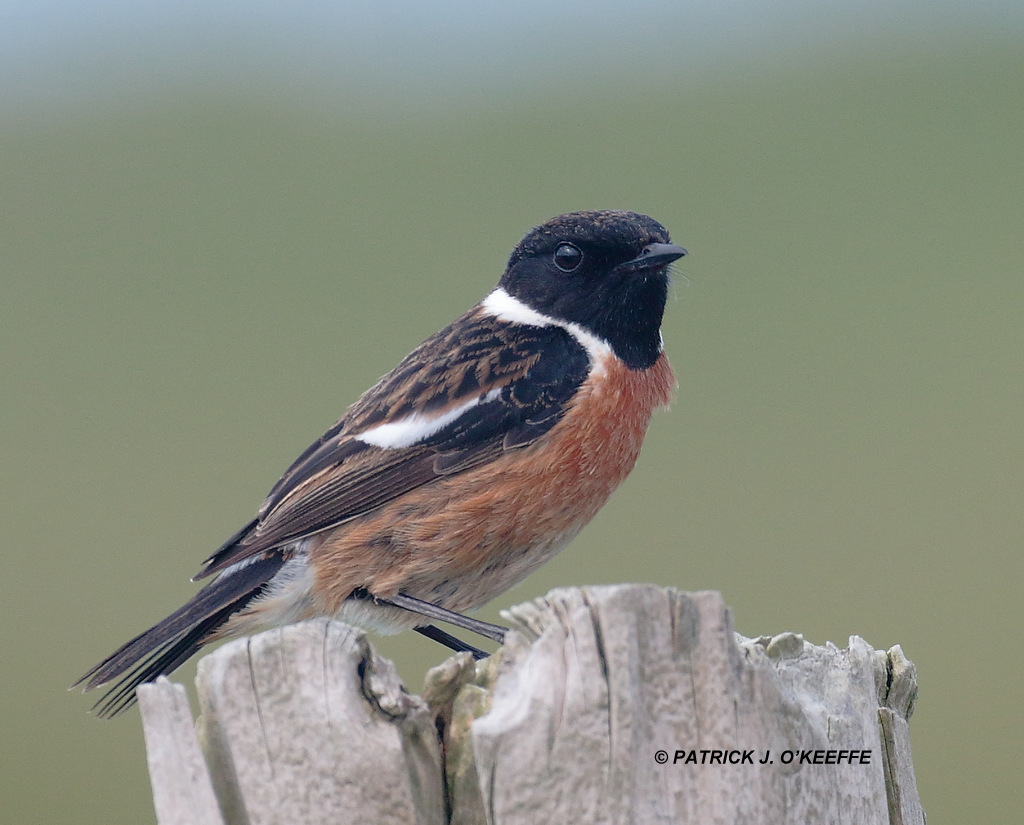
EUROPEAN STONECHAT (Saxicola rubicola subspecies S. r. hibernans) male at Cross Lough, Killadoon, Mullet Peninsula, Co. Mayo, Ireland

 
CLICK ON PHOTO TO SEE HIGHER QUALITY IMAGE
Click external link here for detailed species information
Click external link here to see distribution map and to hear calls

The European Stonechat (Saxicola rubicola) is of the chat family Muscicapidae which is in the genus Saxicola. Preferred habitats include rough grassland, sand dunes and heathland where it is typically seen perched on brambles, gorse or shrubs within the breeding area. 
In the temperate part of its range, nesting commences in late March and up to three broods are raised. It is a partial migrant. Populations from the colder regions move to spend the winter in southern Europe and northern Africa. Successive hard winters, as was the case in 2009/10 and 2010/11 caused severe losses in the mainly sedentary northwestern populations
 
There are two subspecies generally recognised: 
  • Saxicola rubicola rubicola - occurs in central, eastern and southern Europe as well as northern Morocco and southeastern Turkey. 
  •  Saxicola rubicola hibernans - occurs in northwestern Europe including Britain, Ireland, France and Norway.
Patrick J. O'Keeffe / Raw Birds

Wednesday, 25 May 2022

WALL BROWN BUTTERFLY (Lasiommata megera) male at St. Deirbhile's Old Church and Graveyard, Faulmore, Mullet Peninsula, Co. Mayo


 CLICK ON PHOTO TO SEE HIGHER QUALITY IMAGE
Click external link here for detailed species information

The Wall Brown Butterfly (Lasiommata megera) is of the family Nymphalidae which is in the genus Lasiommata
It occurs in most of Europe as well as parts of Western Asia and North Africa. Formally more common and widespread but since the mid 1980 it has been in decline and is now absent from many of its former haunts.  This decline has not been reflected on the Mullet Peninsula where this species is still commonly encountered. The main flight season is from late April to early September, over two generations. Occasionally there is a third generation in late September into early October. Males have a very distinctive dark mid fore wing bar. It overwinters as a larva.  
 
 Patrick J. O'Keeffe / Raw Birds

Tuesday, 24 May 2022

EUROPEAN SHAG (Gulosus aristotelis) adult at Blacksod Harbour, Mullet Peninsula, Co. Mayo, Ireland


CLICK ON PHOTO TO SEE HIGHER QUALITY IMAGE  
Click external link here for detailed species information
Click external link here to see distribution map and to hear calls
 
The European Shag (Gulosus aristotelis) is of the cormorant family Phalacrocoracidae which is in the genus Gulosus. It occurs in northern and western Europe, the Mediterranean Basin, parts of North Africa as well as parts of the Black Sea Coast. This species breeds in colonies on coastal rocky cliffs and on offshore islands. Can easily be confused with Greater Cormorant (Phalacrocorax carbo) but unlike that species, it is very rarely found inland on lakes or rivers.
  
Three subspecies are generally recognised :
      • G. a. aristotelis – occurs in northwestern European Atlantic Ocean coasts
      • G. a. desmarestii – occurs in the Mediterranean Basin and Black Sea coasts
      • G. a. riggenbachi – occurs in northwestern African coasts
 
Patrick J. O'Keeffe / Raw Birds
 
European Shag (Gulosus aristotelis) distribution map

 Breeding                  Non-breeding - winter 
 
SanoAK: Alexander Kürthy, CC BY-SA 4.0 <https://creativecommons.org/licenses/by-sa/4.0>, via Wikimedia Commons


Monday, 23 May 2022

COMMON CLOVER SAWFLY (Tenthredo arcuata) at Saint Anne's Park and Rose Gardens, Clontarf East, Raheny, Co. Dublin, Ireland


 CLICK ON PHOTO TO SEE HIGHER QUALITY IMAGE
Click external link here for detailed species information


The Common Clover Sawfly (Tenthredo arcuata) is of the family Tenthredinidae which is in the genus Tenthredo. It is on the wing from April to late August over two generations. This pollen eating species is commonly encountered on thistles and umbellifers. The larval food plant is White Clover. 

Patrick J. O'Keeffe / Raw Birds